A
Akhil
awertyuiop[dfghjkldfghjklzxfgm,./,nbvvbnvbnvnbvbnvnbvnbvbnvbnvnbvbnvnbvnbvnbwrertwrtertetretrertetrertetr
 Triave Green
· Global Sustainability Community
Triave Green
· Global Sustainability Community
Triave Green is the world's first dedicated sustainability social network. Connect with 60+ posts from eco-conscious individuals, green entrepreneurs, climate activists, and sustainability advocates worldwide. Share zero waste tips, renewable energy innovations, biodiversity discoveries, and sustainable living insights.
🌱 Join Freeawertyuiop[dfghjkldfghjklzxfgm,./,nbvvbnvbnvnbvbnvnbvnbvbnvbnvnbvbnvnbvnbvnbwrertwrtertetretrertetrertetr
hi1
hik
june 5 marathon
https://northeastbylines.co.uk/news/environment/stop-incineration-north-east-sine-and-the-tees-valley-energy-recovery-facility-tverf-project/
Tell Government to do more to tackle plastic and plastic incineration: https://ukwin.eaction.org.uk/plastic
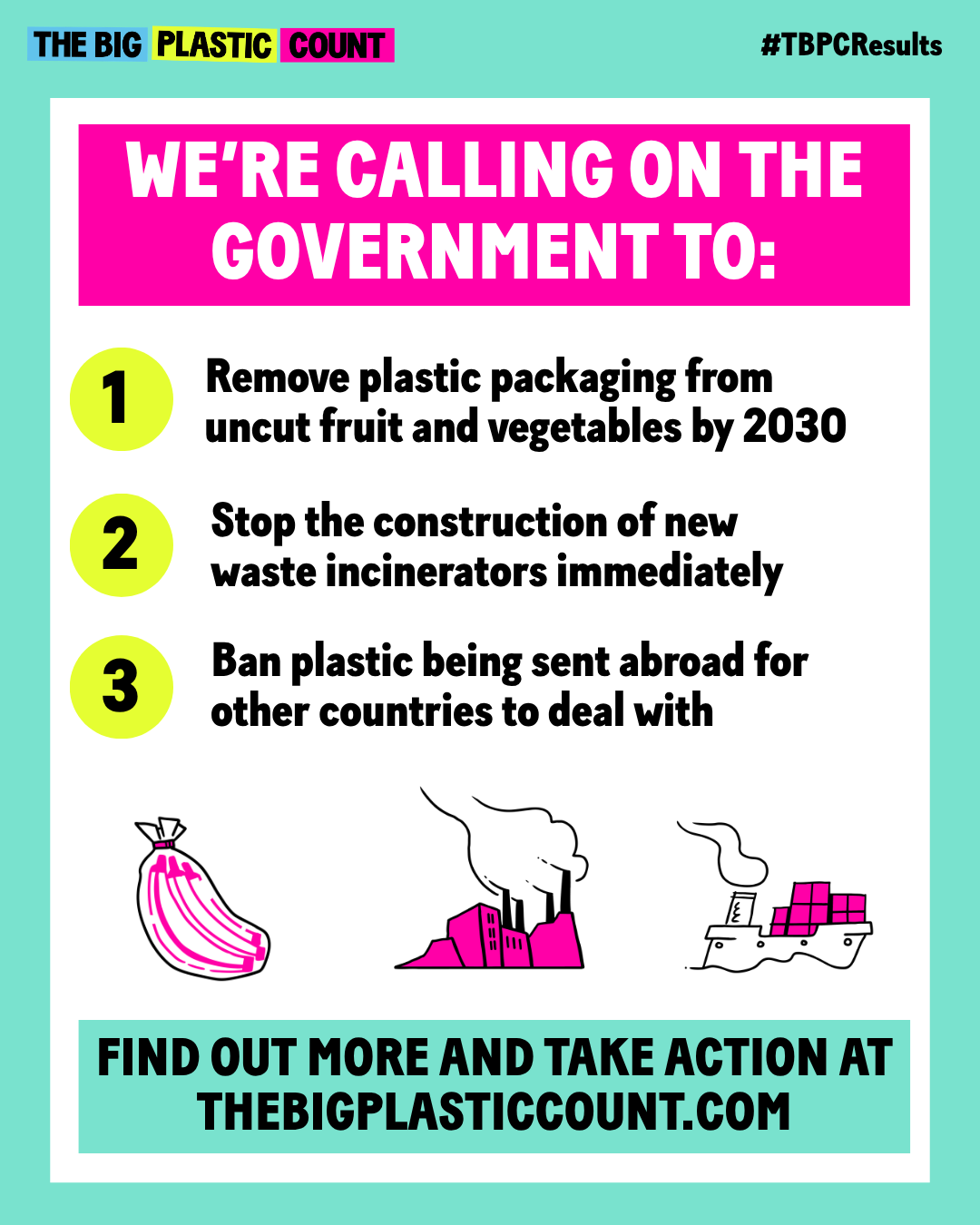
Thanks to everyone who took part in this year's Big Plastic Count. Too much plastic is being incinerated! This is terrible, as each tonne of plastic that is incinerated releases more than 2 tonnes of CO2. The plastics tap must be switched off. https://thebigplasticcount.com/
Permafrost thaw in Siberia and Alaska is releasing methane at rates faster than most models predicted. Some of this is old carbon — sequestered for tens of thousands of years. Once released it cannot be re-sequestered on any human timescale. This is the feedback loop everyone is watching and nobody wants to talk about.
Attended a local council planning meeting last night. A 40-unit development was approved with no green infrastructure requirement, no EV charging provision, and no solar mandate. These decisions are made thousands of times a day in every city. Planning committees are where the energy transition actually happens or doesn't.
Solar geoengineering research is accelerating despite the absence of governance frameworks. Stratospheric aerosol injection could temporarily reduce global temperatures. The side effects — disrupted monsoons, ozone depletion, termination shock — are potentially catastrophic. Research is not deployment but the line is getting harder to hold.
Food waste accounts for approximately 8–10% of global greenhouse gas emissions. Most of it happens at the consumer and retail level in high-income countries. Cold chain infrastructure is the gap in low-income countries. Different problems. Different solutions. Both urgent.
Zero-emission shipping: Maersk launched its first methanol-powered vessel last year. The fuel costs more than bunker fuel. The routes are limited. But the first ship exists and is operating. In 2019 this was considered technically implausible by 2023. The timeline on hard-to-abate sectors is compressing.
Nature-based solutions can deliver up to 30% of the emission reductions needed by 2030 according to the most recent IPCC synthesis. They are currently receiving less than 3% of climate finance. The gap is not scientific — we know what works. It is political and financial.
Cement production accounts for approximately 8% of global CO2 emissions. Low-carbon alternatives — geopolymer cement, supplementary cementitious materials — exist and perform adequately for most applications. The barrier is procurement specifications, not technology. Changing a line in a building contract could move an industry.
30% of needed reductions available from nature-based solutions. Less than 3% of climate finance going there. This is the scandal of our moment.
Just finished installing a home battery system paired with existing solar. Import from grid dropped 78% in the first month. Evening peak demand — the expensive hours — almost entirely covered by stored solar. The payback is 6–7 years. For anyone on the fence: the technology works.
Kelp forests off the California coast declined 95% in the last decade due to sea urchin population explosion following sea star wasting disease. Restoration is happening but the ecosystem is fundamentally different now. Climate change does not operate in isolation — it interacts with every other stressor.
New build homes in the UK certified to Passivhaus standard consume 90% less energy for heating than standard builds. The premium over conventional construction is approximately 8–15%. Over a 30-year mortgage the maths is unambiguous. Building regulations are the most powerful climate lever we are not using.
Seagrass meadows sequester carbon at rates up to 35x faster than tropical rainforests per unit area. They cover less than 0.2% of the ocean floor but store approximately 10% of ocean carbon annually. They are disappearing at 7% per year. Protecting what exists is more urgent than restoring what is lost.
Braiding Sweetgrass changed how I think about reciprocity and ecology. Kimmerer is doing something no scientist has done before.
Carbon footprint as a concept was popularised by a BP advertising campaign in the early 2000s. That is not a reason to ignore personal choices — but it is a reason to be clear about what structural change looks like versus behaviour change. Both matter. The proportions matter too.
Three books I read this month that changed something about how I think: Braiding Sweetgrass by Robin Wall Kimmerer, The Ministry for the Future by Kim Stanley Robinson, Losing Earth by Nathaniel Rich. Different genres, same crisis. Start with Kimmerer if you haven't.
Floating solar on reservoirs: dual benefit of power generation and reduced evaporation. A study across Indian reservoirs estimates potential to reduce water loss by 33% while generating 280 GW of solar capacity. The infrastructure already exists. The panels just need to go on top of it.
Biodiversity credit market is nascent but moving. The Wallacea Trust and others are developing protocols. Unlike carbon, biodiversity is inherently local — you cannot offset an extinct species. The measurement challenge is real. But the absence of a price has not protected anything either.
This data point on Indigenous land rights and biodiversity outcomes should end every debate about the approach to 30x30.
A 20-year longitudinal study of regenerative farms in the UK shows average soil organic carbon increasing at 0.3% per year. Conventional farms in the same region show 0.1% decline. The divergence compounds. Soil is infrastructure. We need to account for it as such.
Urban heat island effect in Chennai peaks at 7°C above surrounding rural areas in May. Cool roofs, street trees, and permeable surfaces can reduce this by 2–3°C. These are not expensive interventions. They are planning decisions. The city is building more concrete and less canopy every year.
Peatland drainage in Southeast Asia for palm oil production releases stored carbon equivalent to several years of global aviation emissions annually. Restoration is technically straightforward — rewet, replant, protect. The economics keep losing to short-term commodity value.
Green hydrogen production costs have fallen 60% since 2020. Electrolysis efficiency is improving. The question is whether we can build enough renewable generation to power the electrolysers before hard-to-abate sectors — shipping, cement, steel — need to transition. The timeline is tight.
Visited the Auroville bioregion this week. 50 years of reforestation have turned barren red laterite into dense mixed canopy. Groundwater levels are measurably higher than surrounding areas. Species counts have increased tenfold. It took decades of patient work by people who had no guarantee it would work.

The talking points haven't caught up with the technology. This is a policy and communications failure not a technical one.
Fast fashion waste entering Ghanaian markets: 15 million items per week arrive at Kantamanto Market in Accra. Approximately 40% is deemed unsellable and goes directly to landfill or enters waterways. The Global South is absorbing the waste cost of Global North consumption.
Community energy cooperative in Germany: 1,200 member households, 4.2 MW of solar across 23 rooftops, annual dividend averaging €180 per household last year. Democratic ownership of energy infrastructure is not idealistic — it is operational in hundreds of European communities.
1.5°C is effectively gone. The scientific consensus is hardening. That does not mean we stop — it means our framing must shift from prevention to survival and adaptation. Communities on the frontline have known this for years. The global North is catching up slowly.
Rewilding 15% of land currently under low-productivity agriculture could sequester approximately 299 billion tonnes of CO2. That is roughly 30 years of current global emissions. The land is available. The political will is the constraint.
Tipping points briefing from the Potsdam Institute: we may already have crossed the threshold for West Antarctic Ice Sheet instability. If confirmed, sea level rise of 3–5 metres is locked in regardless of future emissions reductions. This changes adaptation planning fundamentally.
Greywater recycling system installed last month: toilet flushing, garden irrigation, laundry pre-rinse. Reduces household water consumption by approximately 35%. Installation cost recouped in 2.1 years at current water prices. Every house built after today should have this as standard.

2.1 year payback on greywater recycling. Every new build should ship with this standard. Full stop.
A shipping container converted to a vertical hydroponic farm is producing leafy greens year-round in a climate that otherwise can't support them. 95% less water than soil farming. No pesticides. 365-day yield. The infrastructure exists. The scaling logic is unclear to me — interested in anyone working on the economics.
Methane leaks from fossil fuel infrastructure are responsible for approximately 30% of current warming. These are not legacy emissions — they are happening now. Plugging wells and fixing pipelines is faster and cheaper than almost any other climate intervention. The lack of urgency here is inexplicable.
Biodiversity net gain legislation came into force in England this year requiring 10% net gain on all new developments. Early implementation data shows developers are mostly buying offsite biodiversity units rather than integrating habitat into design. The law is right. The market response is not.

$99/kWh. The moment everyone said would never come. The tipping point for mass EV adoption is now.
Ran an energy audit on our school building. Results: 40% of heating loss through single-glazed windows installed in 1987. The retrofit cost would pay back in 6 years. The capital isn't there. This is why we need green school funds, not just green school curriculum.
Second-hand clothing market is growing at 3x the rate of the overall apparel market. ThredUp forecasts it will reach $350B globally by 2028. Fast fashion is not dead but the trajectory is shifting. Consumer behaviour can move faster than regulation when the economics work.
Our repair café monthly numbers: 67 items brought in, 54 successfully repaired — 81% success rate. Items ranged from a 1960s sewing machine to a cracked phone screen to a leather jacket. We prevented approximately 340kg of waste and saved participants an estimated £2,400.

Indigenous land stewardship covers approximately 22% of the world's land but protects 80% of its remaining biodiversity. The correlation is not coincidental. Land rights and conservation outcomes are the same issue. Funding one without the other makes no sense.
Plastic treaty negotiations in Ottawa this week. The zero draft still has brackets around the most important provisions — production caps, elimination of problematic polymers, financing for developing nations. The gap between ambition and commitments is wide. Watching closely.
EV battery costs hit $99/kWh for the first time this month according to BloombergNEF estimates. Grid parity with ICE vehicles is no longer a forecast — it is happening now in most markets. The question shifts from "if" to "how fast".
Protection should pay more than planting. This framing needs to be in every carbon market reform document.
Mangrove restoration carbon credits are trading at a significant premium to REDD+ forestry credits. The co-benefits — coastal protection, fishery habitat, storm buffering — are finally being priced. Voluntary carbon markets are imperfect but the price signal here is correct.
Urban food forests are producing measurable yield in the third year after planting. Our community plot: 340kg of fruit and nuts this season from 0.4 hectares. Zero inputs beyond initial mulching. The maintenance cost is community volunteer hours. Food security and biodiversity in the same system.
Coral bleaching events that used to occur every 25–30 years now occur every 5–6 years. Recovery requires at least 10–15 years. The math has stopped working. We are permanently outrunning the ocean's ability to heal.
Heat pump efficiency in cold climates: a 10-year study from Norway shows average COP of 2.8 even in sub-zero conditions with modern units. The "heat pumps don't work in cold weather" argument is outdated. The technology has moved on. The talking points haven't.
Direct air capture costs are still at $400–600 per tonne. Atmospheric CO2 concentration means we need to capture at billion-tonne scale. The arithmetic does not work yet. Mitigation remains orders of magnitude cheaper. We cannot technology our way out of not reducing emissions.
Old growth forest stores 30–40% more carbon than plantation forest of the same age. That gap is rarely accounted for in carbon credit schemes. We keep incentivising the wrong forests. Protection should pay more than planting.
Ecocide law campaign update: the ICC is reviewing a proposal to add ecocide as the fifth international crime alongside genocide and crimes against humanity. If passed, executives authorising large-scale environmental destruction face personal criminal liability. This changes the incentive structure entirely.
Postgrowth economics reading list if anyone wants it: Raworth's Doughnut Economics, Hickel's Less is More, Kallis's Degrowth, Simms's Cancel the Apocalypse. Start with Raworth if you are new to the framing. These books changed how I think about what the economy is for.
CBAM — carbon border adjustment mechanism — is making carbon pricing effectively global without requiring global agreement. If you sell to the EU, your emissions have a price. Trade law doing what climate law could not.
421 ppm CO2 tracked daily from a rooftop in Bangalore. Abstract numbers become visceral when you watch them rise in real time every morning.
Rooftop solar output this week: 47 kWh generated, 38 kWh consumed. Net positive for the third month running. The payback period on this installation just dropped below 4 years with current grid prices. Numbers that used to seem impossible are now routine.
Triave Green is a global sustainability-focused social network and eco community platform connecting environmentally conscious individuals, green entrepreneurs, sustainability advocates, and climate activists. Whether you care about zero waste living, renewable energy, climate change, biodiversity, ocean conservation, sustainable fashion, or eco-friendly business — Triave Green is your home online.